
Mental Health · June 28, 2026
At Turned Leaf Psychiatry, we frequently speak with patients who feel completely overwhelmed by the demands of daily life. They wake up with a long to-do list and the best of intentions, but by 5:00 PM, they find themselves exhausted, anxious, and burned out, wondering where the day went.
When productivity is unmanageable, it doesn't just impact your output—it can affect your mental health, contributing to stress and burnout. True daily productivity isn't about forcing your brain to work past the point of exhaustion. It's about understanding your own patterns and structuring your day to support mental clarity.
Here are four practical strategies you can try tomorrow to work with your brain, rather than against it.
Align Your Tasks with Your Circadian Biology
A common myth in self-help culture is that everyone must wake up at 5:00 AM to be successful. Sleep patterns and individual circadian rhythms vary from person to person, and forcing a rigid schedule that clashes with your biology can lead to sleep deprivation and cognitive fog.
Instead of pushing through exhaustion, track your natural energy cycles to identify your own biological prime time:
- Peak cognitive windows: For most people, this occurs a few hours after waking, when alertness naturally peaks. Guard this time for "deep work"—complex problem-solving, emotional regulation, and strategic thinking.
- The afternoon trough: When your energy dips (often post-lunch), processing speed naturally slows. Rather than forcing intense focus, pivot to low-stakes, administrative tasks like sorting mail, organizing your desktop, or answering routine emails.
Eliminate the Focus Tax (Reduce Context Switching)
If you keep your email inbox open on one screen while trying to draft a report on another, your brain is paying a real cognitive tax. Research suggests it can take an average of over 20 minutes to fully return to a task after a single interruption.
Even a momentary glance at a text message can create attention residue—a state where part of your working memory remains stuck on the distraction. For individuals already managing ADHD, anxiety, or high stress, this constant fracturing of attention can deplete executive functioning by midday.
The solution:
- Practice task batching. Group similar activities together. Check and respond to messages at designated intervals (e.g., 9:00 AM, 1:00 PM, and 4:00 PM) rather than leaving notifications live all day.
- Minimize digital clutter. Close unnecessary tabs. Treating your digital workspace like a quiet room can help you focus on one objective at a time.
Protect Executive Function with Time-Blocking
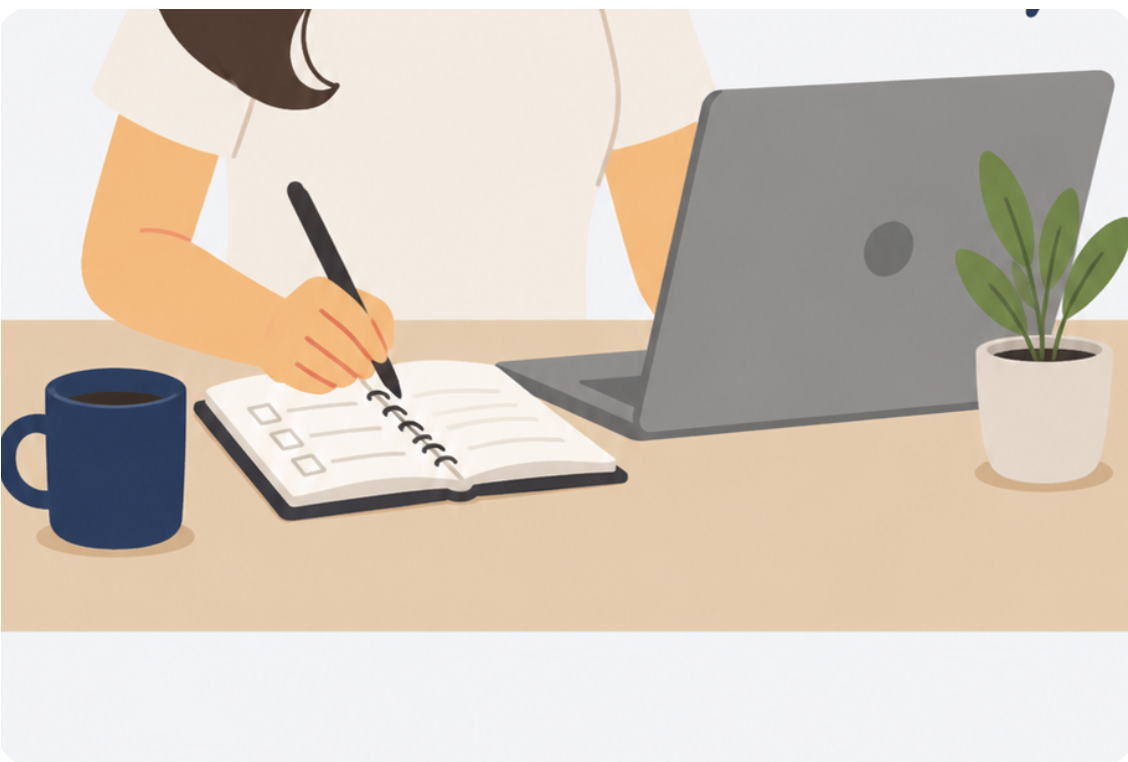
Traditional to-do lists are passive—they tell you what you need to do, but not when or how long it will take. Looking at a large, unstructured list of tasks can trigger decision fatigue and procrastination.
Time-blocking turns your to-do list into an active schedule. Instead of keeping a vague checklist, assign specific tasks to dedicated blocks of time on your calendar.
When you block out "10:00 AM–11:15 AM: Review Project Guidelines," you remove some of the mental friction of constantly deciding what to do next. It provides structure, can reduce anxiety, and gives your brain permission to focus on the present moment.
Work in Sprints to Avoid Cognitive Fatigue: The Pomodoro Technique
The brain generally works better with intermittent rest than with hours of unbroken effort. Trying to push through several hours of continuous work can lead to mind-wandering and diminished returns.
The Pomodoro Technique breaks work into manageable intervals:
- Choose one single task.
- Set a timer for 25 minutes and work with focused attention.
- When the timer goes off, take a 5-minute break. Step away from your desk, stretch, or get a glass of water.
- After four cycles, take a longer 15–30 minute break.
Knowing that a break is only 25 minutes away can reduce the impulse to self-distract, helping you stay on task through the afternoon.
Sustainable Productivity Starts Small
Overhauling your entire routine at once can be overwhelming. Consider picking just one of these strategies to try this week. Sustainable productivity is a practice of respecting your brain's natural limits while working toward your goals.
If you consistently struggle with staying on task, organization, or follow-through despite trying strategies like these, it may be worth discussing an evaluation for ADHD or anxiety with a clinician. If you are already being treated for one of these conditions and still have difficulty functioning day to day, a follow-up evaluation can help determine whether your treatment plan needs adjustment.
You don't have to navigate these challenges alone. Reach out to Turned Leaf Psychiatry to schedule an evaluation and take the next step toward mental clarity.
References
If you are in crisis
If you are having thoughts of suicide or are in emotional crisis, call or text 988 to reach the 988 Suicide & Crisis Lifeline. If you or someone else is in immediate danger, call 911.
Medical disclaimer
This article is educational information only. It is not a diagnosis, a treatment plan, or a substitute for individualized care from your own clinician. For emergencies call 911; for a mental health crisis call or text 988.
Read our editorial policy or report a correction.