
Mental Health · July 11, 2026
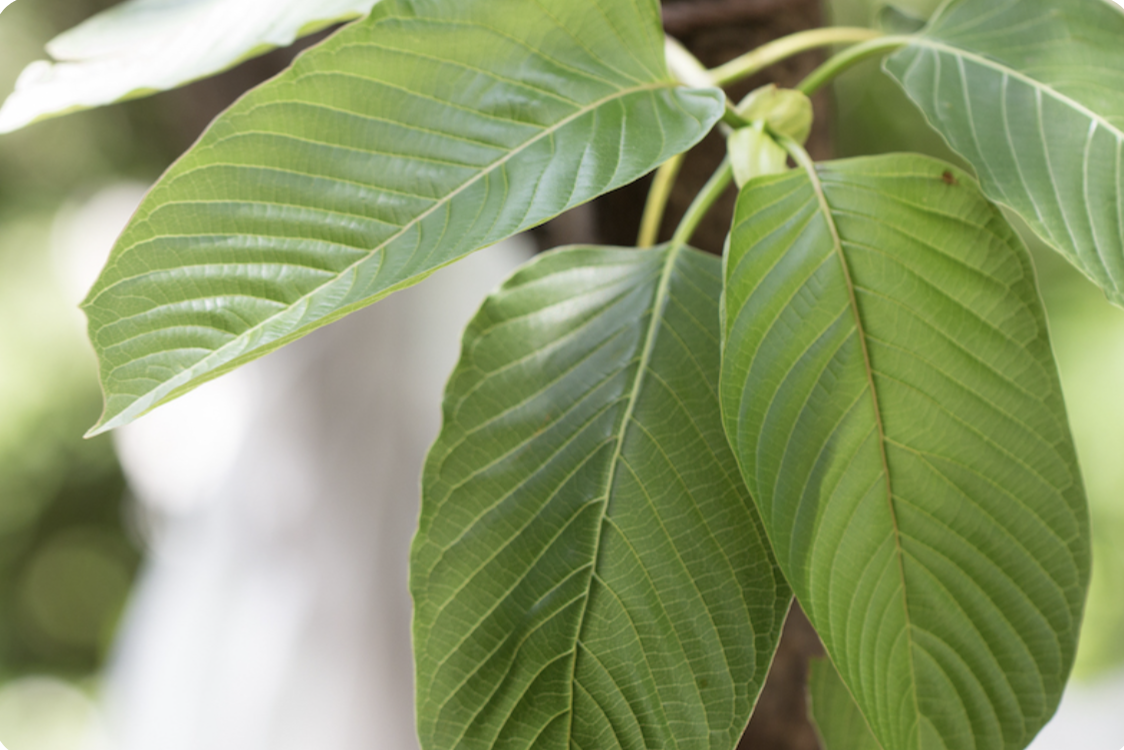
In recent years, the herbal supplement market has seen a dramatic shift in how Mitragyna speciosa, commonly known as kratom, is consumed. What began as a traditional whole-leaf remedy has evolved into a complex botanical landscape. With the rapid emergence of isolated, highly concentrated alkaloids like 7-hydroxymitragynine (7-OH) and semi-synthetic compounds like mitragynine pseudoindoxyl, understanding the pharmacology, risks, and clinical reality of kratom is more critical than ever.
What is Kratom and How Does It Work?
Traditional kratom contains over 40 distinct alkaloids, acting primarily on a dose-dependent, biphasic scale:
- Low Doses (1g – 5g): Acts as a mild stimulant, providing energy, alertness, and sociability.
- High Doses (5g – 15g+): Shifts into a sedative and analgesic, inducing severe pain relief and calm.
Pharmacologically, kratom targets a diverse array of receptor pathways. While it is heavily recognized for binding to the $\mu$-opioid receptor, it operates as a partial agonist in its natural raw-leaf form. Beyond the opioid framework, it also actively binds to $\alpha_2$-adrenergic receptors (which drives its stimulant properties and alters blood pressure), 5-HT2A serotonin receptors, and dopamine D2 receptors.
The Crucial Difference: Bypassing the Safety "Ceiling"
What traditionally set raw kratom leaf powder apart from prescription opioids (like morphine or oxycodone) was a unique safety mechanism known as biased agonism. Traditional full opioids heavily recruit a protein called beta-arrestin 2, which triggers classic, lethal side effects: severe respiratory depression (stopping breathing) and profound constipation. Natural mitragynine activates the pain-relieving G-protein pathway while causing minimal beta-arrestin 2 recruitment—creating a natural "ceiling effect" for respiratory depression.
This functional dynamic is highlighted in a controlled human clinical trial published in Therapeutic Drug Monitoring(Henningfield et al., 2026), which demonstrated that unadulterated, whole-leaf kratom powder was generally well-tolerated at standardized doses without producing severe respiratory issues or severe abuse liability.
However, the modern marketplace has largely abandoned the raw leaf matrix. Consumers are increasingly encountering highly isolated, super-concentrated formulations of 7-hydroxymitragynine (7-OH) and an emerging, exceptionally potent metabolite called mitragynine pseudoindoxyl (MP).
A breakthrough study published in ACS Pharmacology & Translational Science (Kamble et al., 2020) demonstrated that when 7-OH metabolizes or undergoes non-enzymatic rearrangement in human plasma, it converts into mitragynine pseudoindoxyl. This compound binds to the mu-opioid receptor with extraordinary, unprecedented affinity (Ki = 0.087), making it vastly more potent than standard mitragynine.
By isolating or synthetically altering these alkaloids into shots and tablets, the natural leaf's safety ceiling disappears. The risk profile quickly morphs to look identical to traditional, highly addictive controlled opioids.
The Clinical Risks: Abuse, Overdose, and Testing
- Abuse and Overdose Potential: While the fatal overdose risk of pure raw leaf powder remains remarkably low on its own, the risk skyrockets to high when utilizing isolated 7-OH/pseudoindoxyl products, or when standard kratom is mixed with other central nervous system depressants like alcohol, benzodiazepines, or prescription narcotics. Long-term use rapidly down-regulates opioid receptors, generating intense physical dependence and psychological tolerance.
- Drug Screenings: Standard workplace drug panels (such as 5-panel or 10-panel tests) do not detect kratom, as its chemical footprint differs entirely from commercial opiates. However, specialized clinics, rehab facilities, and pain management providers increasingly utilize highly sensitive Liquid Chromatography-Mass Spectrometry (LC-MS) testing panels specifically engineered to screen for mitragynine and 7-OH metabolites.
- Legal Status: Federally, kratom remains legal but unregulated, categorized by the DEA as a "Drug of Concern." At the state level, it is explicitly banned in 6 states (including Alabama, Arkansas, and Indiana), while roughly 30 other states have passed the Kratom Consumer Protection Act (KCPA) to enforce age restrictions and prohibit synthetic manipulation.
The Reality of Quitting and Withdrawal
Abruptly discontinuing chronic kratom use triggers a distinct withdrawal syndrome. Because kratom influences both opioid and monoamine (serotonin/norepinephrine) systems, the withdrawal feels like a combination of opioid detox and antidepressant discontinuation:
- Physical Symptoms: Severe restless leg syndrome (RLS), debilitating muscle aches, hot/cold flashes, profuse sweating, and severe gastrointestinal distress.
- Psychological Symptoms: Profound rebound anxiety, treatment-resistant insomnia, intense cravings, and severe irritability.
Established clinical guidelines for safely quitting emphasize a multi-layered approach. This often requires managing the physical symptoms using targeted medications like Clonidine (an alpha2 adrenergic agonist that reduces sweating, anxiety, and rapid heart rate) or Gabapentin to curb severe restless leg syndrome. For deeper dependencies—particularly those involving highly concentrated extracts—evidence-based protocols recommend short-term, structured Medication-Assisted Treatment (MAT) using long-acting stabilizers like Buprenorphine (Suboxone) to protect receptors and eliminate cravings.
How Turned Leaf Psychiatry Can Help
Breaking free from kratom dependence requires an approach that respects both the physical chemistry of addiction and the unique pharmacology of the supplement. At Turned Leaf Psychiatry, under the clinical direction of Stephen Patrick Sweeney, PMHNP-BC, a board-certified psychiatric mental health nurse practitioner—we provide the specialized medical guidance necessary to navigate recovery safely.
Drawing from a clinical background rooted in emergency medicine and neuro-intensive care, Stephen provides expert addiction medicine and comprehensive dual-diagnosis support. Our practice specializes in structured, personalized medical detoxification and outpatient tapering programs, incorporating evidence-based Medication-Assisted Treatment (MAT/Suboxone) alongside targeted comfort medications to ease withdrawal.
If you or someone you know is struggling to manage or quit kratom, you don't have to handle it alone. Contact Turned Leaf Psychiatry today to build a safe, grounded path forward.
References
If you are in crisis
If you are having thoughts of suicide or are in emotional crisis, call or text 988 to reach the 988 Suicide & Crisis Lifeline. If you or someone else is in immediate danger, call 911.
Medical disclaimer
This article is educational information only. It is not a diagnosis, a treatment plan, or a substitute for individualized care from your own clinician. For emergencies call 911; for a mental health crisis call or text 988.
Read our editorial policy or report a correction.